
What Is Burlesque? What Is Cabaret? What Is The Difference? | The Velvet Burlesque
What Is Burlesque? What Is Cabaret? What Is the Difference?
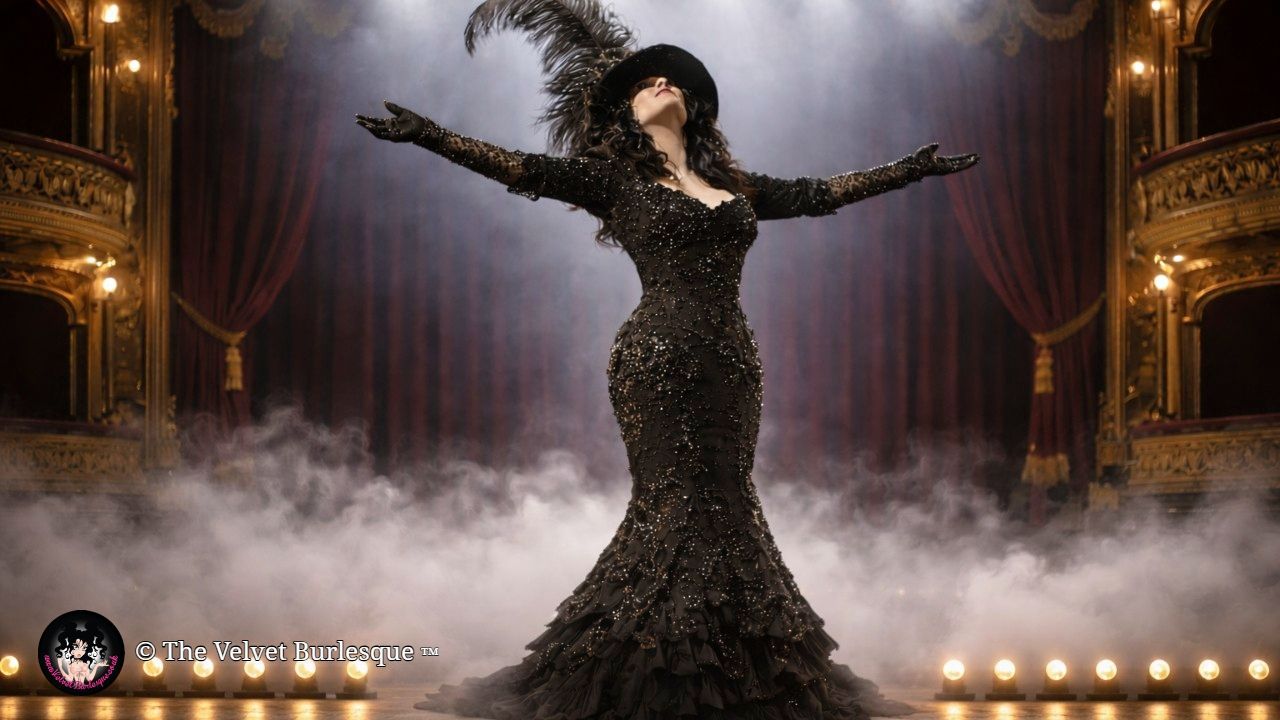
What Is Burlesque? What Is Cabaret? And What Is The Difference?
Burlesque. Cabaret. Variety. Striptease. Circus. Vaudeville. Showgirls.
These words are often used together, and sometimes interchangeably, but they do not all mean the same thing.
If you are completely new to this world, it can be surprisingly difficult to work out exactly what somebody means when they describe a performance as "burlesque", a production as "cabaret", or an evening as a "variety show".
The simplest distinction is this:
Burlesque is a performance genre. Cabaret is a much broader form of live entertainment which can include burlesque alongside many other types of performance.
There is, however, considerably more to both than that.
Modern burlesque and cabaret draw upon centuries of theatre, satire, music hall, variety entertainment, dance, striptease, comedy, circus, glamour, spectacle, and artistic experimentation.
And neither can really be reduced to a single style.
What Is Burlesque?
Modern burlesque is a theatrical performance art which can combine dance, striptease, characterisation, costume, comedy, storytelling, choreography, music, glamour, satire, and the art of tease.
Some acts are sophisticated and sensual.
Some are theatrical and dramatic.
Others are comic, bizarre, political, extravagant, dark, glamorous, deliberately ridiculous, or completely unexpected.
The performer may create an elaborate character, construct an act around a particular piece of music, use spectacular costuming, tell a story, parody an idea, explore a theme, or simply create a beautifully staged piece of entertainment.
That enormous creative range is one of the defining characteristics of contemporary burlesque.
There is no single burlesque "look".
And there is no single correct way for a burlesque act to be performed.
Where Does the Word Burlesque Come From?
The word burlesque comes from the Italian burlesco, meaning something comic, ludicrous, or mocking. Burlesco derives from the Italian word burla, meaning a joke, jest, mockery, or piece of nonsense.
The term passed into French as burlesque before entering the English language in the mid-17th century. Its earliest English use referred to comic, grotesque, or deliberately exaggerated imitation - particularly the humorous treatment of subjects normally considered serious or elevated.
Historically, theatrical burlesque used parody, satire, exaggeration, and humorous imitation to play with established ideas and conventions. Serious subjects, literature, opera, theatre, politics, fashionable culture, and familiar characters could all be exaggerated, mocked, or turned upside down for comic effect.
This original meaning is important because burlesque did not begin as a synonym for striptease. Its foundations lie in that earlier parody, satire, exaggeration, ridicule, and playful subversion. The association with theatrical variety, glamour, and striptease developed much later as burlesque evolved through different forms of popular entertainment into the form more widely recognised today.
As popular entertainment evolved, so did burlesque. Through theatrical traditions including British Music Hall and American variety entertainment, burlesque became increasingly associated with productions combining comedy, music, dance, spectacle, glamorous performers, and eventually striptease.
The modern burlesque scene has inherited elements from many of these traditions rather than developing from one single historical form. Contemporary burlesque can therefore encompass glamour and striptease, but also comedy, parody, character, theatricality, storytelling, dance, satire, and deliberate subversion.
What Is Modern Burlesque?
Contemporary burlesque is extraordinarily varied.
Some performers draw heavily upon classic glamour and the visual language associated with twentieth-century striptease.
Others create work which bears very little resemblance to that tradition.
Modern burlesque can include (but is not limited to):
- Classic burlesque and striptease
- Neo-burlesque
- Comedy burlesque
- Character performance
- Dance-led burlesque
- Theatrical burlesque
- Dark or alternative burlesque, including styles such as 'gorelesque'
- Nerdlesque and performances inspired by popular culture, fantasy, film, gaming, comics, and fandom
- Parody and satire
- Elaborate costume and prop work
- Fan dance - using feather fans, silk fans, and other styles of decorative hand fans
- Veil work and flowing fabric props
- Spectacular oversized props, from giant martini glasses and carousel horses to multi-tier cakes and countless other imaginative creations
- Showgirl-inspired performance
- Storytelling and conceptual acts
- Performance incorporating circus or speciality skills
Individual artists often combine several of these approaches within the same act, which makes attempts to place modern burlesque into one neat category particularly difficult.
The common thread is not a particular costume, body type, musical style, aesthetic, or degree of nudity.
It is the creation of an intentional theatrical performance - one in which personality, presentation, concept, character, movement, humour, tease, storytelling, or spectacle can be used to create something uniquely individual.
Is Burlesque the Same as Striptease?
Not exactly.
Or perhaps more accurately: no, but yes, but ...
Striptease is strongly associated with burlesque and remains an important part of the art form, but the two terms are not interchangeable.
A burlesque act may incorporate extensive costume removal. It may contain only a small reveal. Or it may contain no striptease whatsoever.
Where striptease is used, the removal of costume becomes part of the construction of the performance itself.
Timing matters. Music matters. Character matters. Costume matters. Anticipation matters.
A glove removed at precisely the right musical moment can be more effective than an entire costume disappearing in seconds. That is why the word tease is so important - it is the art of the tease.
The reveal is not necessarily the whole performance. It is one of the tools available to the performer.
Burlesque, Stripping, Exotic Dancing, and the Double Standard
There is, however, an important reality that is sometimes rather conveniently overlooked.
If a burlesque performer is deliberately removing their clothes on stage as part of a performance, they are stripping.
Burlesque does not magically stop that action from being stripping simply because it takes place beneath theatrical lighting, while wearing rhinestones, corsetry, feather fans, or an elaborate costume.
And nor should it need to.
There remains an uncomfortable double standard surrounding stripping and erotic performance.
Striptease performed within burlesque is frequently praised as artistic, empowering, glamorous, theatrical, sophisticated, or skilful, while strippers and exotic dancers working in clubs and other adult entertainment environments can still be dismissed, stigmatised, or treated as somehow less deserving of respect.
The settings may be very different.
The conventions may be different.
The relationship with the audience may be different.
The choreography, artistic intention, costuming, performance structure, working environment, and way in which the performer is paid may all be different.
But acknowledging those differences does not require us to pretend that one involves stripping while the other somehow does not.
Burlesque performers, strippers, and exotic dancers may all use skills including tease, sensuality, body control, confidence, musicality, timing, audience awareness, physical technique, character, and stage presence.
How those skills are used can vary enormously from one performer and environment to another, but attaching greater respectability to one label does a disservice to the performers behind the others.
Striptease also has an important place within the history of burlesque itself. As burlesque evolved through theatrical and variety entertainment, stripping and the art of tease became increasingly prominent elements of the form, eventually becoming part of the popular image of burlesque that many people recognise today.
Modern burlesque may use striptease as glamour, comedy, parody, characterisation, storytelling, satire, sensuality, spectacle, or simply as an art form in its own right.
So, is burlesque the same as striptease?
No - because burlesque is a much broader performance form, and a burlesque act does not have to involve stripping at all.
But when a burlesque act does involve the deliberate removal of clothing?
Yes. That element of the performance is striptease. It is stripping.
And - most importantly - whether somebody describes themselves as a burlesque performer, stripper, exotic dancer, or another kind of adult entertainer, there should be no shame attached to the act of stripping - and certainly no need to demean one group of performers in order to legitimise another.
Does Burlesque Have to Be Sexy?
No.
Burlesque can certainly be sensual, seductive, erotic, or provocative, but it can also be funny, strange, grotesque, glamorous, political, theatrical, poignant, powerful, or completely absurd.
Some acts deliberately play with traditional ideas of glamour and sexuality. Some embrace them wholeheartedly. Others parody them.
Burlesque gives performers enormous freedom to construct a stage persona or artistic concept rather than conform to one narrow idea of what the genre should look like.
What Are Burlesque Audiences Like?
Burlesque audiences can be wonderfully diverse, with adults of different genders, backgrounds, and levels of familiarity with the art form coming together to enjoy live performance.
Many contemporary burlesque audiences are female-majority, although the appeal of burlesque extends far beyond any one gender or demographic.
A supportive audience is an important part of the atmosphere. Performers are often enthusiastically cheered for their individuality, confidence, creativity, stage presence, self-expression, and the enormous variety of bodies, identities, characters, and performance styles represented on stage.
That enthusiasm, however, does not mean that normal boundaries disappear.
Consent and respect matter.
Audience members should never assume that a revealing costume, sensual performance, striptease, or direct interaction from the stage gives permission to touch a performer.
Unless a performer has very specifically invited an interaction as part of an act, physical contact from audience members is not acceptable.
Burlesque may play confidently with sexuality, tease, flirtation, glamour, and provocation, but those things exist within the boundaries of a performance. A respectful audience understands the difference between enthusiastically enjoying the show and crossing a performer’s personal boundaries.
What Is Cabaret?
Cabaret is broader than burlesque.
Rather than describing one particular performance discipline, cabaret usually describes a style or format of live entertainment which can bring together many different types of performers within the same programme.
A cabaret production may contain burlesque, but it does not have to.
It might also feature singers, comedians, dancers, circus artists, magicians, drag performers, speciality acts, physical performers, musicians, or artists whose work crosses several disciplines at once.
Cabaret is therefore often about curation.
Different acts are brought together to create one complete evening of entertainment. And when they are brought together by passionate producers and exceptional performers, the result can be unlike almost any other form of live entertainment.
Cabaret is also often characterised by a particularly direct relationship between performers and their audience. It may be presented in an intimate setting, but contemporary cabaret is certainly not confined to small clubs or traditional table-seated venues - the format can translate just as effectively to theatres and larger live productions.
What Types of Acts Can Appear in Cabaret?
Almost anything capable of working within a live variety format can potentially become part of a cabaret programme.
Depending upon the production, audiences might see:
- Burlesque performers
- Cabaret singers
- Circus artists
- Fire performers
- Aerialists
- Acrobats
- Comedians
- Magicians
- Drag artists
- Dancers
- Showgirls
- Troupe performance
- Character acts
- Physical theatre
- Speciality performers
- Novelty acts
- Musicians
- Spoken-word artists
- Unusual variety performers
This means that two productions both described as "cabaret" can be completely different.
One might be sophisticated, glamorous, and intimate.
Another might be riotous, alternative, circus-heavy, or experimental.
The word describes a broad theatrical world rather than one fixed recipe.
What Is the Difference Between Burlesque and Cabaret?
The easiest way to understand the difference is to think of burlesque as an art form, and cabaret as a wider performance format.
A burlesque performer can appear in a cabaret show.
But not every cabaret performer is a burlesque performer.
For example, a production could include:
A burlesque striptease act.
Followed by a circus performer.
Followed by a comedian.
Followed by a singer.
Followed by a magician.
Followed by another burlesque act.
That would be a cabaret or variety show containing burlesque.
A production consisting entirely of burlesque performers could, of course, still be described as a burlesque show.
The terminology overlaps because the performance worlds themselves overlap.
What Is a Variety Show?
A variety show is another closely related term.
As the name suggests, variety entertainment presents a mixture of different performance disciplines within one programme.
Historically, British Music Hall, American Vaudeville, revue, circus, cabaret, and other forms of popular entertainment all contributed to the development of modern variety performance.
Today, "variety show" can be a particularly useful description for productions containing a broad mixture of cabaret, circus, burlesque, comedy, magic, dance, music, and speciality entertainment.
Cabaret and variety therefore frequently overlap.
The precise label used often depends upon the style, venue, history, and personality of the production.
What Is Vaudeville?
Vaudeville was an enormously influential form of variety entertainment, particularly associated with the United States during the late nineteenth and early twentieth centuries.
A vaudeville bill could contain singers, comedians, dancers, acrobats, magicians, novelty performers, musicians, and numerous other speciality acts.
Modern cabaret and variety producers sometimes use the word "vaudeville" stylistically, particularly where a production draws inspiration from historic variety theatre.
It should not, however, simply be treated as another word for modern burlesque.
What Is a Revue?
A revue is another theatrical form closely connected with the history of cabaret and variety entertainment.
Traditionally, revues combined elements such as music, dance, sketches, comedy, spectacle, and ensemble performance rather than telling one continuous dramatic story in the way that a conventional play or musical might.
The influence of revue can still be seen throughout contemporary cabaret and theatrical variety productions.
Where Does Circus Fit Into Cabaret?
Circus has its own enormous history and collection of specialist disciplines, but contemporary circus frequently crosses into the cabaret world.
A cabaret producer might programme performers specialising in aerial skills, contortion, juggling, acrobatics, fire performance, acrobatic balancing, physical comedy, object manipulation, or other circus disciplines.
Presented within a mixed bill alongside burlesque, comedy, music, dance, and other speciality acts, these become part of the overall cabaret experience.
This crossover is one reason modern cabaret can be so difficult to define neatly.
The boundaries between performance genres are often deliberately blurred.
Where Does Drag Fit Into Cabaret?
Drag has a rich performance tradition of its own and is not simply a branch of burlesque.
However, drag artists have long been a significant part of cabaret, nightlife, theatre, and variety entertainment.
A drag performance might incorporate lip-sync, vocals, comedy, dance, character, costume, audience interaction, political commentary, or numerous other performance styles.
As with circus, drag therefore exists independently while also appearing naturally within a wider cabaret programme.
Is Cabaret the Same as Musical Theatre?
No.
Musical theatre generally presents a continuous production in which songs, dialogue, choreography, characters, and narrative form part of an overall theatrical work.
Cabaret does not necessarily have that structure.
A cabaret show can instead consist of completely separate performances, each with its own performer, music, style, and concept.
However, cabaret performers frequently draw upon musical theatre, and musical theatre performers may also work in cabaret.
Once again, these performance worlds often intersect without being identical.
What Makes a Good Burlesque and Cabaret Show?
A good cabaret show is not simply a random collection of performers placed on a stage.
Programming matters.
The contrast between acts matters.
Pacing matters.
Running order matters.
Technical production matters.
Music, lighting, presentation, hosting, costuming, staging, and the overall relationship between individual performances all contribute to the experience.
A skilled producer considers how the entire programme works as an evening rather than viewing each act in isolation.
A beautifully elegant performance may become even more effective when it follows something riotously funny.
A high-energy circus act may completely change the pace of an evening.
A dramatic act may need space around it.
An unexpected performer can alter the atmosphere of an entire room.
That carefully controlled contrast is one of the great strengths of cabaret.
Is The Velvet Burlesque™ a Burlesque Show or a Cabaret Show?
The answer is: both - and considerably more besides.
The Velvet Burlesque™ has always drawn upon the wider worlds of burlesque, cabaret, dance, circus, comedy, variety, glamour, speciality entertainment, and theatrical production.
Founded in 1991 by multi-award-winning producer, choreographer, teacher, and performer Lara Gothique, The Velvet Burlesque™ has created and presented live entertainment incorporating established professional performers alongside original production concepts, choreography, theatrical presentation, and carefully curated variety programming.
The name may say burlesque, but the creative world around The Velvet Burlesque™ has never been restricted to one performance discipline.
That breadth is part of what has always made The Velvet Burlesque™ distinctive.
Want to see that crossover in action rather than simply read about it? Explore professionally filmed burlesque, cabaret, circus, drag, dance, comedy, and variety performances in our Velvet Burlesque™ YouTube archive.
Burlesque, Cabaret, and Variety Continue to Evolve
One of the most exciting things about burlesque and cabaret is that neither exists as a museum piece.
Performers continually reinvent them.
New influences appear.
Performance styles cross over.
Traditional techniques are rediscovered and reinterpreted.
Artists combine disciplines that previous generations may have considered completely separate.
A twenty-first-century cabaret bill might contain echoes of music hall, vaudeville, revue, circus, nightclub entertainment, classic striptease, contemporary dance, comedy, drag, theatre, and performance art - sometimes within the same evening.
That ability to evolve is precisely why these forms of entertainment have survived.
Want to Know What Actually Happens at a Burlesque & Cabaret Show?
If you now understand what burlesque and cabaret are, but you are wondering what actually happens when you attend a live show - what the atmosphere is like, who goes, what to wear, and what first-time audience members can expect - read our separate guide: What to Expect at a Burlesque, Cabaret & Circus Show
That guide explores the audience experience itself, while this article explains the performance genres behind it.
Discover The Velvet Burlesque™
The Velvet Burlesque™ brings together decades of professional experience in burlesque, cabaret, choreography, dance, entertainment, and live production.
Alongside live entertainment, multi-award-winning choreographer, teacher, performer, and producer Lara Gothique provides expert-led burlesque and heels classes, dance workshops, private tuition, bespoke choreography, performer mentoring and act development, wedding first dance choreography, and bespoke entertainment for corporate events and private celebrations.
Whether you want to watch it, learn it, perform it, or commission it, there is far more to the world of burlesque and cabaret than a single definition can ever completely contain.
Discover more about The Velvet Burlesque™ here.
BOSS LADY - Lara Gothique
Founder, Curator, Choreographer, Performer, Swamp-Witch, and Slightly Feral Producer of The Velvet Burlesque™
© Lara Gothique - The Velvet Burlesque™
All content, text, and imagery are the original work of Lara Gothique - The Velvet Burlesque™ unless otherwise stated.
You are very welcome to share this blog post in its original form, but please do not reproduce, reuse, or quote any part of it without prior written permission.












Discover More with The Velvet Burlesque
For the latest updates, exclusive behind-the-scenes insights, and a glimpse into the world of burlesque and cabaret, follow us on social media, subscribe to our YouTube channel, and connect with us on WhatsApp.
- Be the first to hear about upcoming shows, workshops, and special announcements.
- See highlights from past performances and behind-the-scenes moments.
- Join our thriving community of performers, students, and cabaret enthusiasts.
Experience the magic beyond the stage, and follow us here: